Sofubi ソフビ Production Research
A long-form R&D effort focused on helping build a workable sofubi production method in Vietnam through testing, mold development, material research, and real project deadlines.
Duration
2023 - 2024
Client
Madlad Figures
Services
#
Process Development
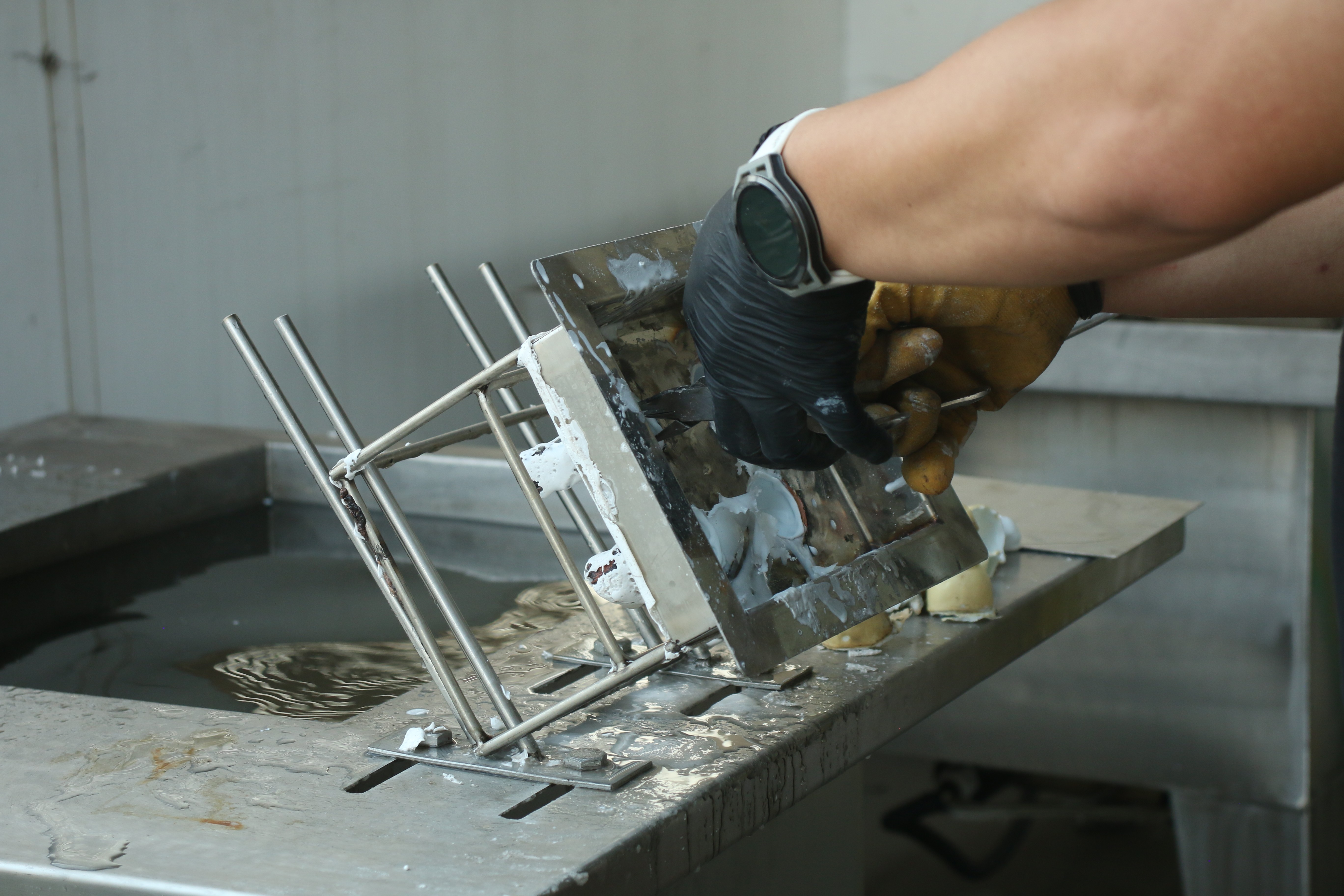
Overview
This project was less about one single toy and more about building a production language from scratch.
When I joined Madlad Figures, sofubi was still at a very early stage internally — more like a promising direction than a stable pipeline. So this research became about turning a rough setup into something real: something the team could test, improve, use on actual products, and eventually evaluate as a possible new branch of the business.
The Problem
At the time, Madlad’s main strength was injection molding, but the team wanted to explore sofubi as another path forward.
The bigger idea was pretty clear: sofubi already had a strong place in the art toy world, but the production landscape was limited. China often came with high MOQs, and Japan, while iconic, was highly manual and often slow due to long waitlists.
That created a gap — especially for artists or small studios who wanted something more culturally expressive, lower-volume, and closer to the spirit of independent collectible toys. The question was whether Vietnam could become a meaningful place to develop that kind of production.
In March 2023 when I first entered the project, the setup was still very bare-bones: a simple working setup, a list of raw materials, and a lot of unanswered questions.
Research
So the early phase was really about getting our hands dirty and figuring out what this process actually wanted from us.
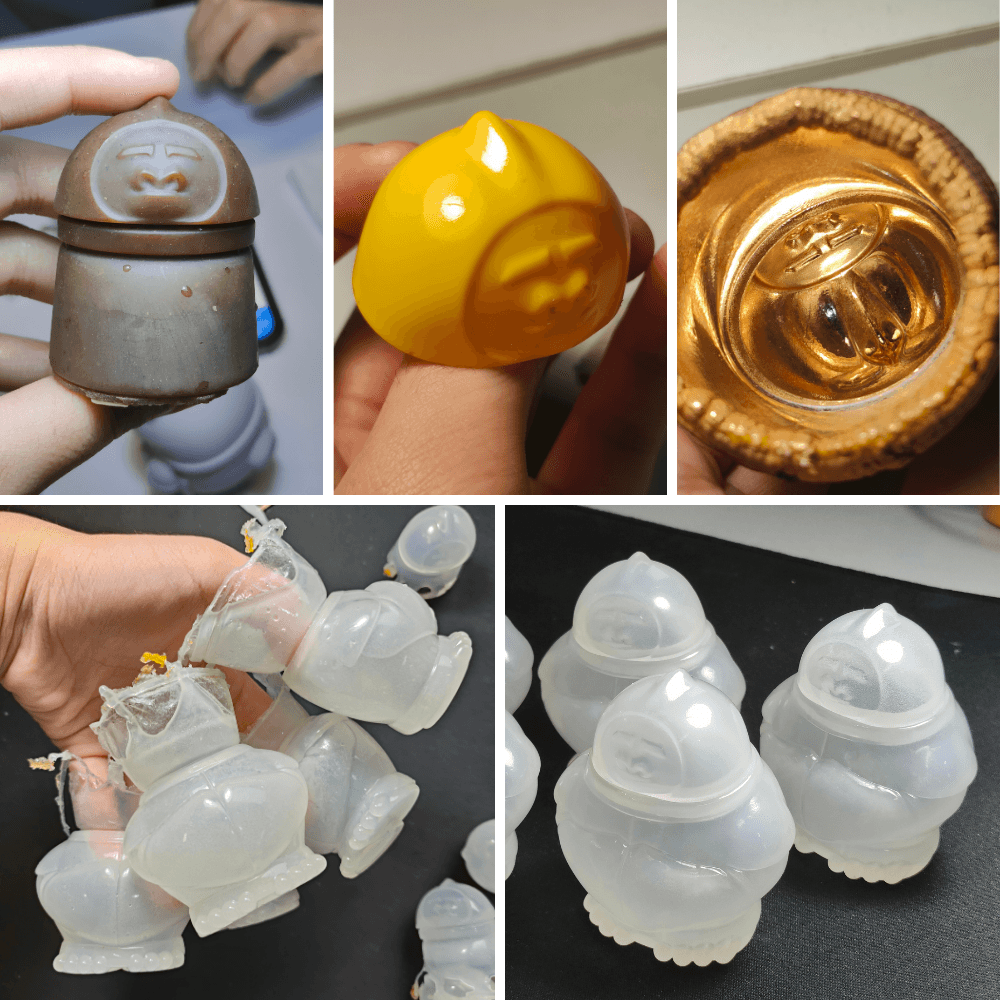
From March to May 2023, I worked with teammates on testing, documenting insights, and pushing mold making forward — even though by the end of that phase, the molds were only technically complete and the output quality was still rough. Very much a “cool, it exists… but yikes” stage.
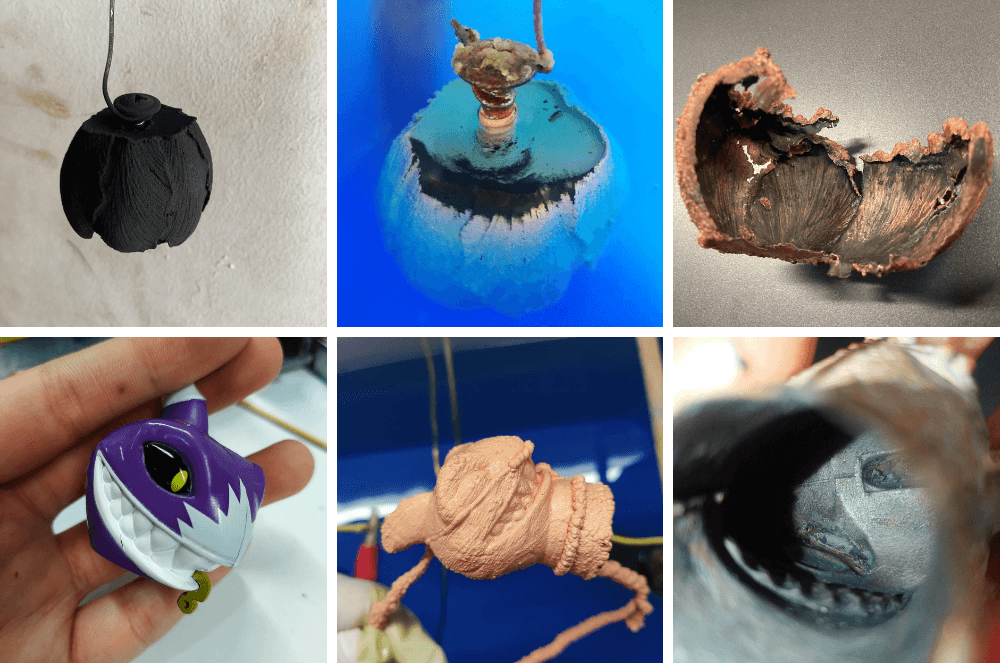
From there, the research got more layered. It was no longer only about “can we make a mold,” but also:
can we improve the mold surface enough to get a more convincing result?
can we develop a workflow that feels repeatable instead of lucky?
can this move beyond pure experiment and hold up under a real project deadline?
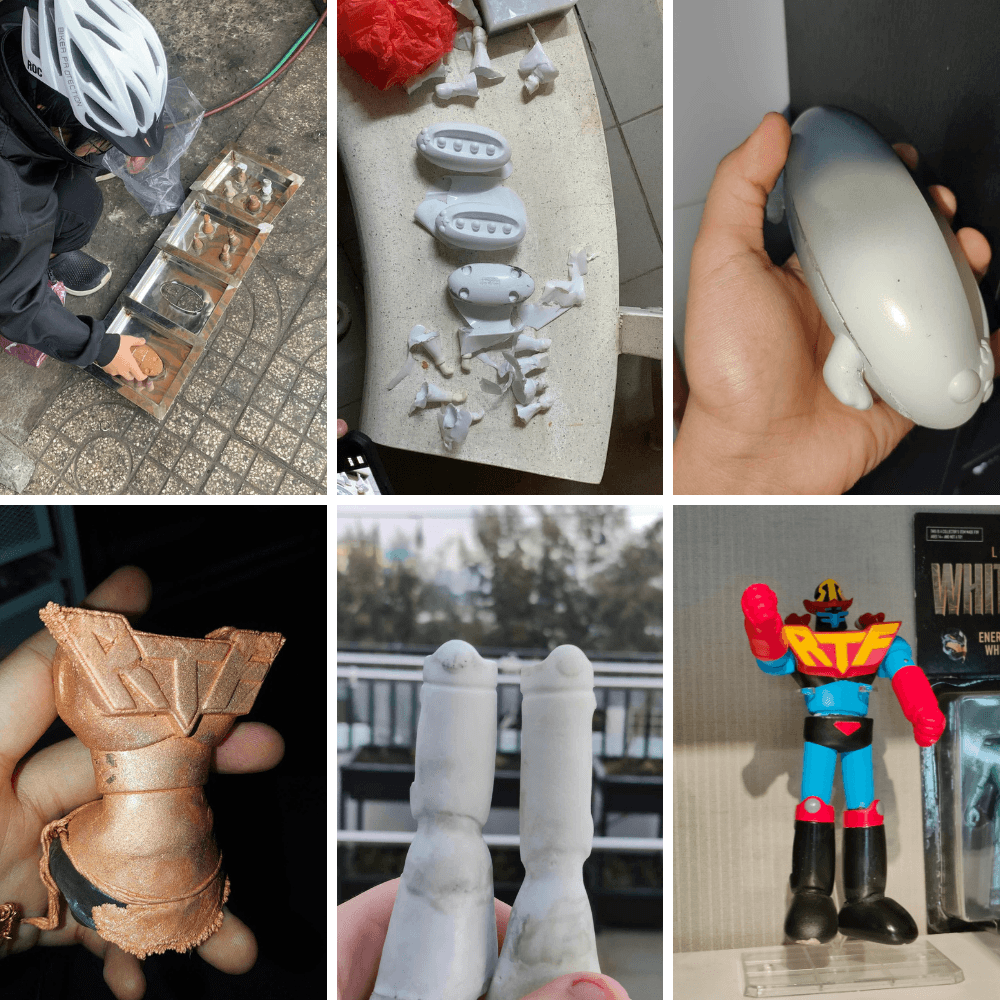
That’s where projects like Bánh mì Nom Nom and later RTF Robot Sofubi became part of the research itself — not side stories, but actual test cases for whether the process could survive contact with reality.
Discovery
The biggest thing this research taught me is that process-building is its own design discipline. You’re not just making an object — you’re shaping the conditions that allow the object to exist at all. And those conditions can be messy. A lot of the time, the work wasn’t glamorous or linear. It was repetitive testing, noticing tiny improvements, borrowing insight from other prototype methods, and trying to make one step less bad than the step before it.
It also became clear that sofubi sat in a weird but interesting space. On one hand, it had a lot of cultural and artistic potential. On the other, the production path we were developing was extremely labor-heavy and gave back only a small output.
So the deeper we got, the more we realized this wasn’t just a technical challenge — it was also a business model question hiding inside a craft problem.
Design Process
As the research progressed, my role expanded with it. Once I started understanding the process more clearly, I focused on improving mold surface quality, helping shape more workable outputs, and using actual projects as validation points for the pipeline. By the period after Color Fiesta, I had stepped into a leadership role within the R&D team, which meant the work became less about isolated experiments and more about pushing the whole system forward.
That included:
improving mold outcomes and understanding the sofubi workflow more fully
using Nom Nom as a proof-of-concept project tied to a public release
using Scott Zillner’s RTF Robot Sofubi as a more technically demanding project with a hard deadline
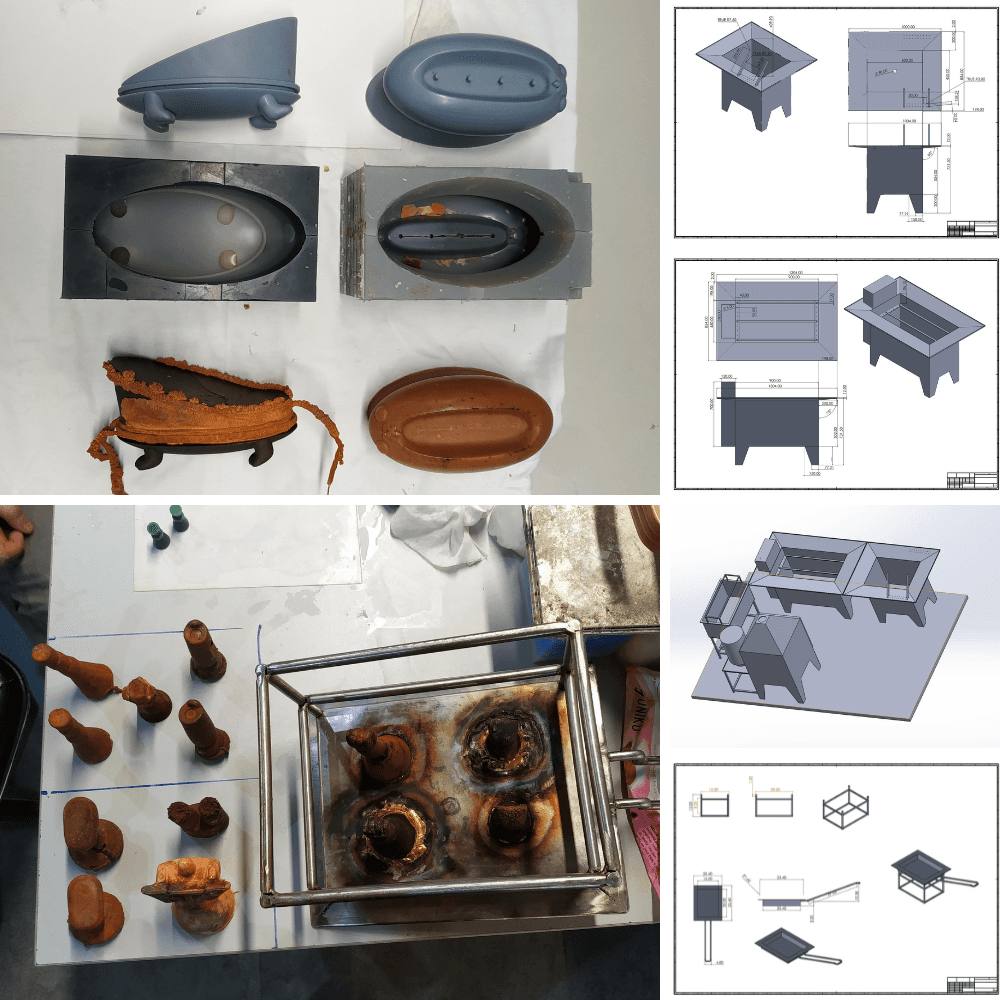
expanding the scale of the setup in preparation for more serious production
working with vendors to develop cooking equipment and fixtures
sourcing Japanese plastic with specs that better matched what the product needed
later extending R&D into a casting branch for low-volume production in the 20–100 range
This phase was basically the “ok, let’s stop treating this like a mysterious side experiment and start seeing what it takes to make it operational” era.
Final delivery
This research did lead to real outputs. It helped take Bánh mì Nom Nom from concept into proof of concept, later into preorder and delivery. It also supported RTF Robot Sofubi, which was completed and sent to Robot Fest in the US on deadline. So in that sense, the research absolutely became tangible — it produced objects, not just notes and tests.
But honestly, one of the most valuable final outcomes was clarity. By the time the team had gone through preorder, delivery, and broader evaluation, we also understood the limits of the method much more clearly: the approach was still too labor-intensive, too low-output, and too difficult to scale comfortably for either small artists with limited budgets or larger brands needing more volume. So the project delivered two things at once: a real sofubi capability, and a very real understanding of where that capability stopped making sense.
At the end of 2024, I improved the quality of our sofubi mold to perfection myself and believe Madlad had achieved the Japanese quality of sofubi. Shout out to all Madlad peeps that helped me along this journey!
This project was less about one single toy and more about building a production language from scratch.
When I joined Madlad Figures, sofubi was still at a very early stage internally — more like a promising direction than a stable pipeline. So this research became about turning a rough setup into something real: something the team could test, improve, use on actual products, and eventually evaluate as a possible new branch of the business.